
Call Now:
(219) 365-2400
Are the plants in your commercial landscape struggling to thrive? Are weeds constantly taking over and demanding endless maintenance? These common frustrations often point to poor soil health.
At Redbud Landscape, we have provided premier commercial landscape services across Northwest Indiana for more than 18 years. We’ve seen firsthand how unprotected soil and a lack of organic matter can undermine even the most beautiful designs.
Fortunately, one of the most effective ways to improve soil health in commercial landscapes is strategic mulching. Applying the right mulch in the right way creates a protective barrier that stabilizes soil, reduces maintenance, and supports vigorous plant growth. Let’s explore how this simple practice can transform the health of your commercial landscape.
What Does Mulch Actually Do for Soil Health?
A thriving commercial landscape starts with healthy soil. Mulch works like a protective blanket, shielding the ground from environmental stresses that weaken plant roots and disrupt soil balance.
When mulch is applied properly, it provides all kinds of benefits:
Moisture Retention
Water loss through evaporation is one of the biggest challenges for commercial landscapes, especially during hot Midwest summers. Mulch slows evaporation by covering exposed soil, allowing moisture to remain in the root zone longer.
This leads to several important benefits:
- Fewer irrigation cycles during dry periods
- More consistent moisture levels for plant roots
- Lower overall water usage for the property
Temperature Regulation
Mulch also acts as natural insulation for the soil.
During summer, it shields the ground from direct sunlight and keeps soil temperatures cooler, reducing plant stress. In winter, it slows heat loss, helping protect root systems from sudden freezing temperatures.
This temperature stability allows plants to establish stronger root systems and survive seasonal extremes more easily.
Erosion Control
Heavy rainfall can wash away valuable topsoil, particularly in open planting beds and sloped commercial landscapes. Mulch helps anchor the soil in place by reducing the direct impact of rainfall and slowing water runoff.
This protection prevents erosion and helps preserve the nutrients and organic matter that plants rely on.
Weed Suppression
Weeds compete with landscape plants for nutrients, water, and sunlight. Mulch blocks sunlight from reaching weed seeds in the soil, preventing many of them from germinating.
As a result, landscapes require far less manual weed removal and maintain a cleaner, more polished appearance throughout the season.
Which Mulch Materials Are Best for Commercial Landscapes?
If you want your commercial landscape’s soil to be healthier, the first step is to choose the right mulch. Different materials serve different purposes depending on the landscape’s needs.
Organic vs. Inorganic Mulches
Organic mulches are typically the best option for improving soil health. Materials such as shredded bark, wood chips, and compost break down gradually, adding organic matter back into the soil.
As they decompose, they help:
- Improve soil structure
- Increase aeration around plant roots
- Support beneficial microbial activity in the soil
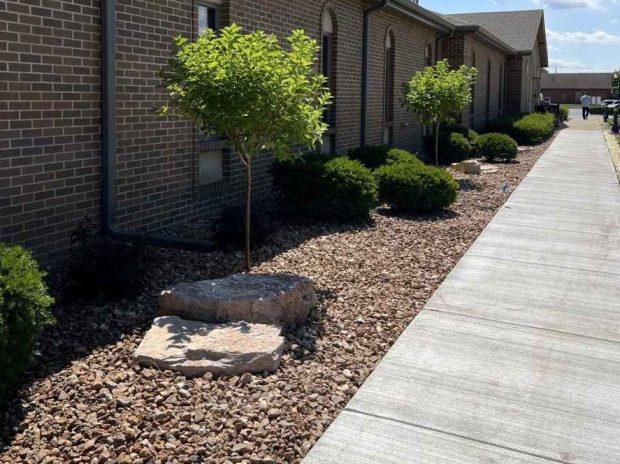
Inorganic mulches, such as gravel or river rock, do not provide these soil-building benefits. However, they can be useful in places where durability or drainage is more important than soil enrichment.
Matching Mulch to the Area
Different areas of a commercial property may benefit from different mulch materials.
For example:
- Bark nuggets perform well in parking lot islands, building entrances, and walkways where foot traffic is common.
- Fine composted mulch works well in planting beds where improving soil quality is the priority.
- Gravel or river rock is suitable for drainage areas or locations where organic mulch may wash away.
Selecting the right material helps support both soil health and long-term landscape performance.
How Do You Mulch Correctly to Get the Best Results?
Even high-quality mulch can cause problems if it is applied incorrectly. Following these proper installation practices allows mulch to protect soil without damaging plant roots:
Maintain the Right Depth
Mulch should generally be applied at a depth of 2 to 4 inches. A thinner layer may fail to block weeds or retain moisture effectively. However, applying mulch too deeply can restrict airflow to the soil and suffocate plant roots. Maintaining the correct depth protects the soil while allowing it to breathe.
Avoid the “Volcano” Effect
One of the most common mulching mistakes is piling mulch directly against the base of trees and shrubs. This practice, often called volcano mulching, traps moisture against the bark, creating ideal conditions for rot, disease, and pest activity. Instead, mulch should be spread evenly while leaving a few inches of open space around plant trunks and stems.
Apply Mulch at the Right Time
Timing also plays an important role in maximizing the benefits of mulch.
- Spring applications help lock in moisture and suppress weeds before the growing season begins.
- Late fall applications provide insulation that protects roots from winter temperature swings.
Refreshing mulch at the right times of year helps maintain healthy soil conditions throughout every season.
Stop Fighting Your Commercial Landscape and Start Strengthening Your Soil
Healthy commercial landscapes begin with healthy soil. When mulch is chosen and applied strategically, it stabilizes moisture levels, protects roots, improves soil structure, and reduces the ongoing maintenance demands many properties face.
At Redbud Landscape, we are passionate about helping property owners build stronger landscapes. If your property is struggling with dry soil, recurring weeds, or declining plant health, our team can develop a mulching and maintenance strategy designed specifically for your commercial landscape. Connect with our landscaping experts today to get started.
“It Always Seems Impossible Until It Is Done.”

Need help with a residential or commercial landscape project?
Similar Posts You Might Like

Why Should You Schedule Fall Cleanup Before the First Frost?
You've watched the leaves pile up for a couple of weeks now. You tell yourself there's still time, that cleanup…
ADA-Compliant Landscape Design: What Do Business Owners Need to Know?
When you decide to redo your business's landscaping, you of course want the finished property to look inviting from the…
Why Is Professional Grounds Maintenance Important?
Running a commercial property means constantly deciding where to invest your budget. Grounds maintenance can seem like an easy expense…
Contact Redbud Landscape Services
Contact us today for more details about the services we offer.

The information on this website is for informational purposes only; it is deemed accurate but not guaranteed. It does not constitute professional advice. Testimonials are not a guarantee, warranty or prediction of what your experience with us will be. By providing contact information, users acknowledge and give explicit consent to be contacted via the methods of communication provided, including SMS. Message and data rates may apply. Message frequency may vary. Reply STOP to opt out.
NUVEW | Copyright 2026 All Rights Reserved | Accessibility Notice | Privacy Policy